Screenshots
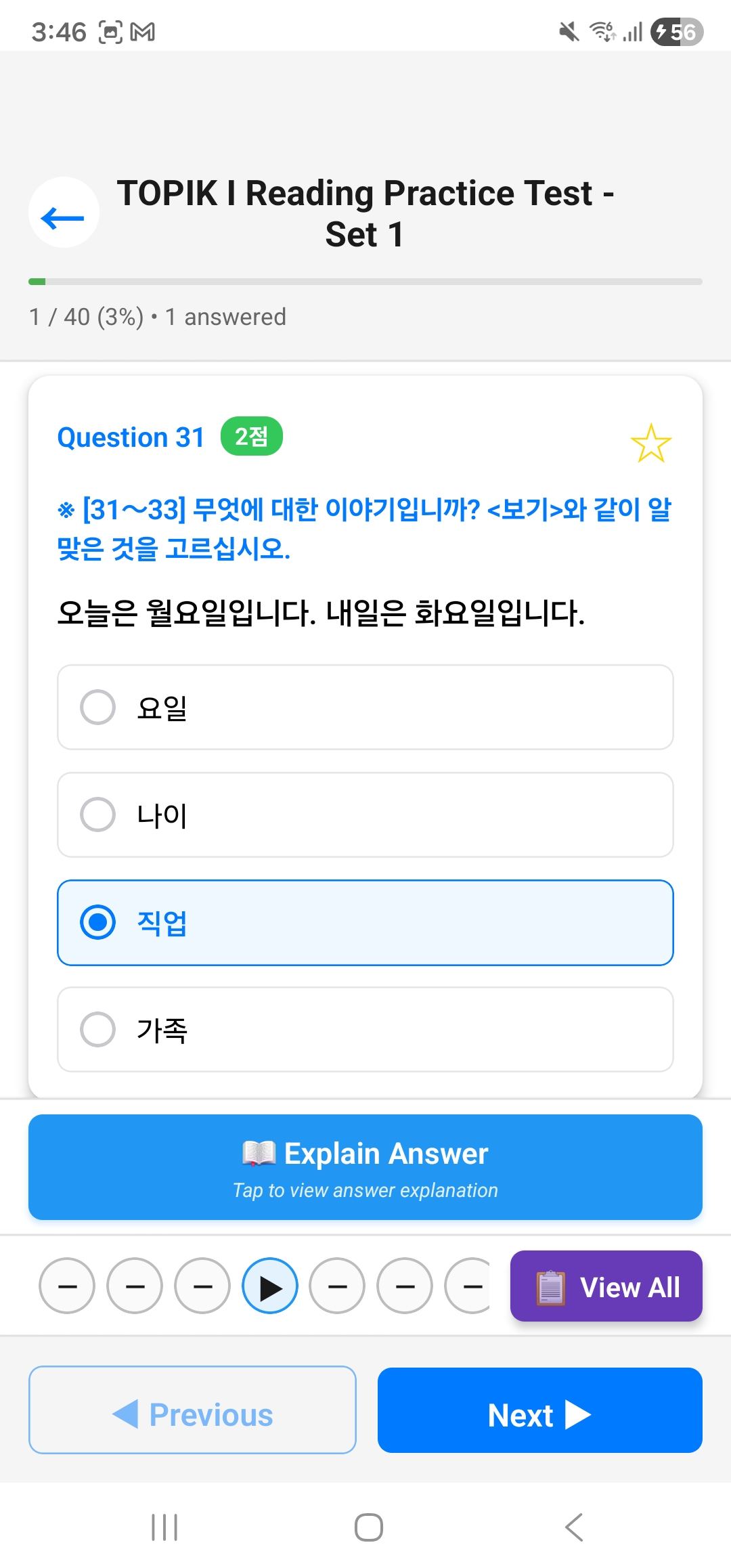
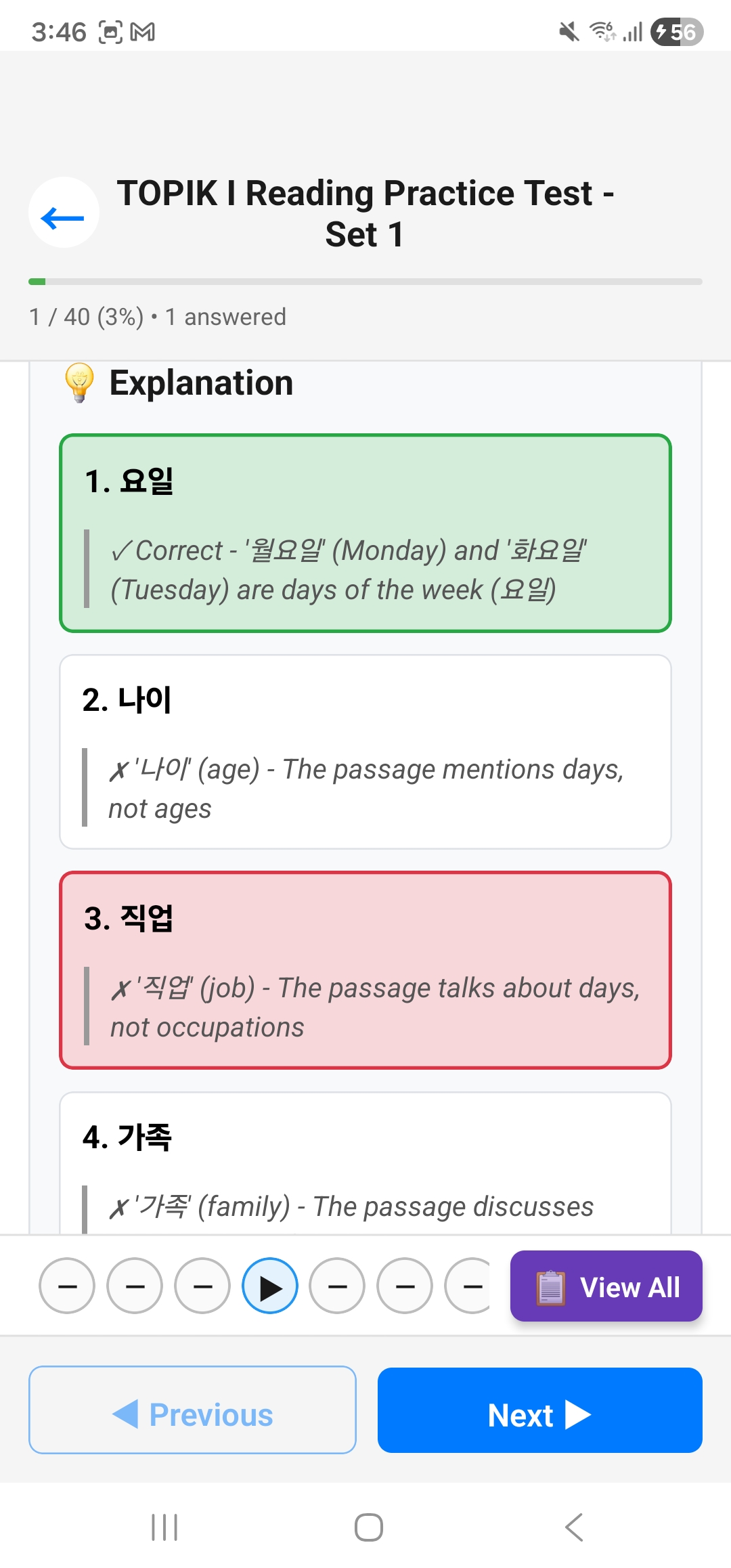
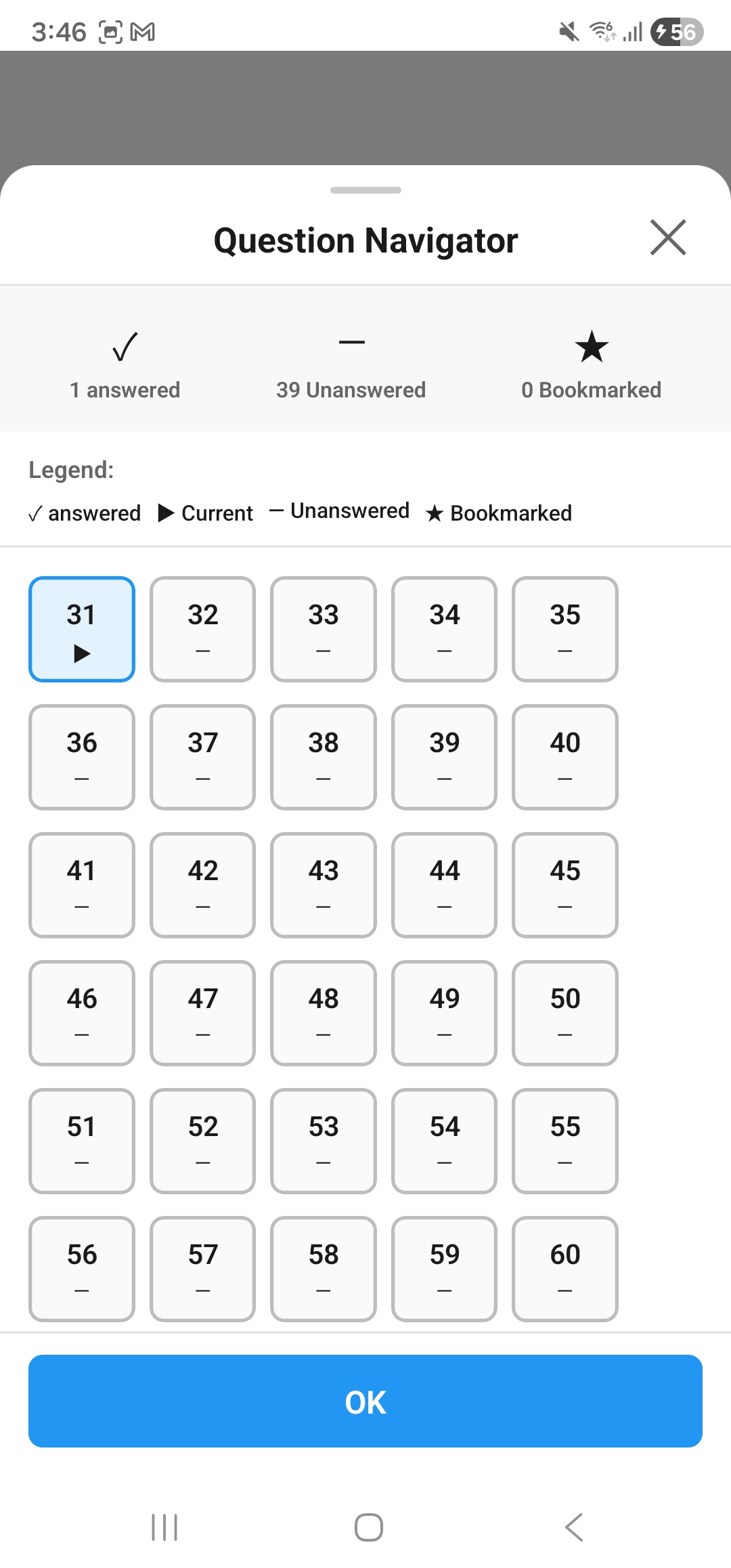
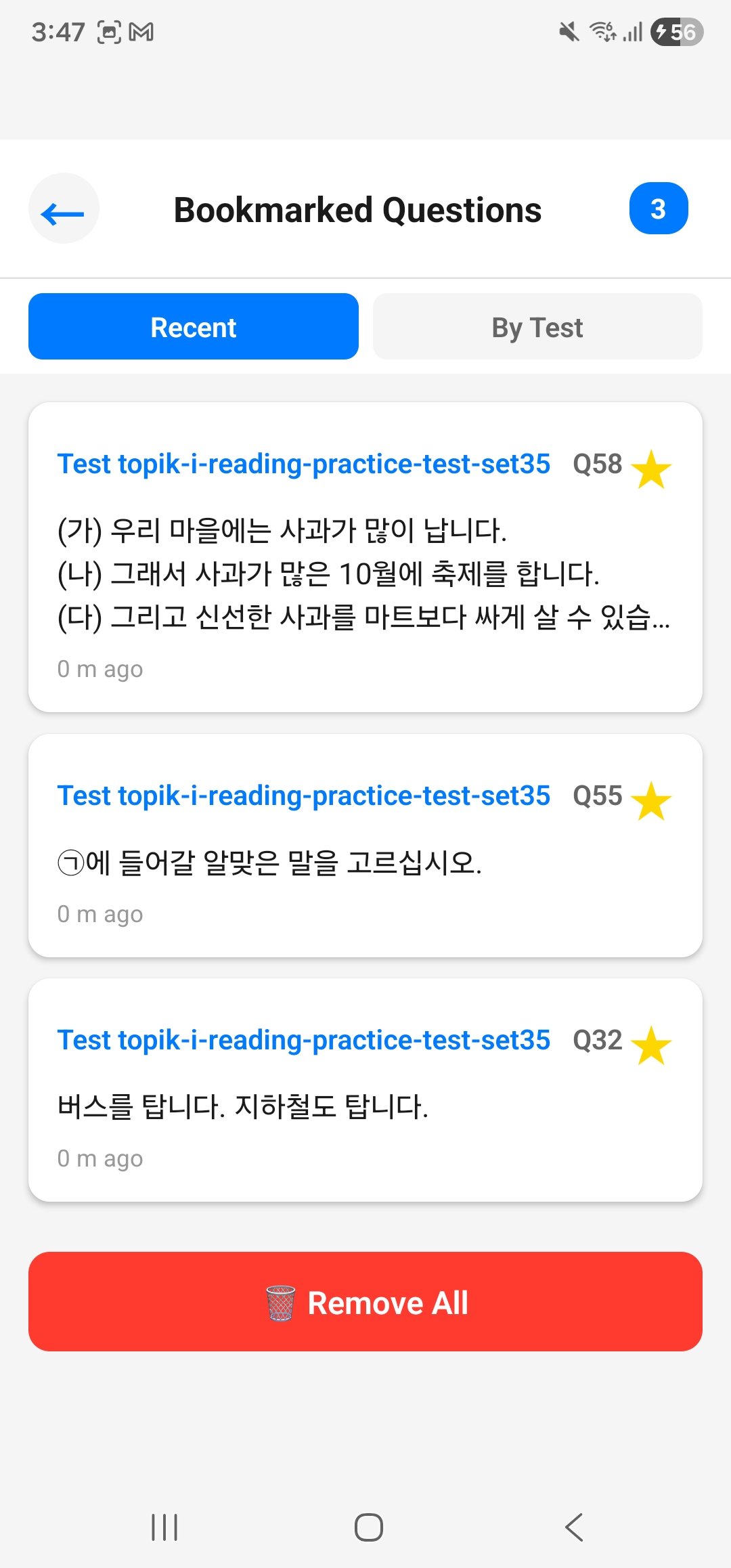
About this app
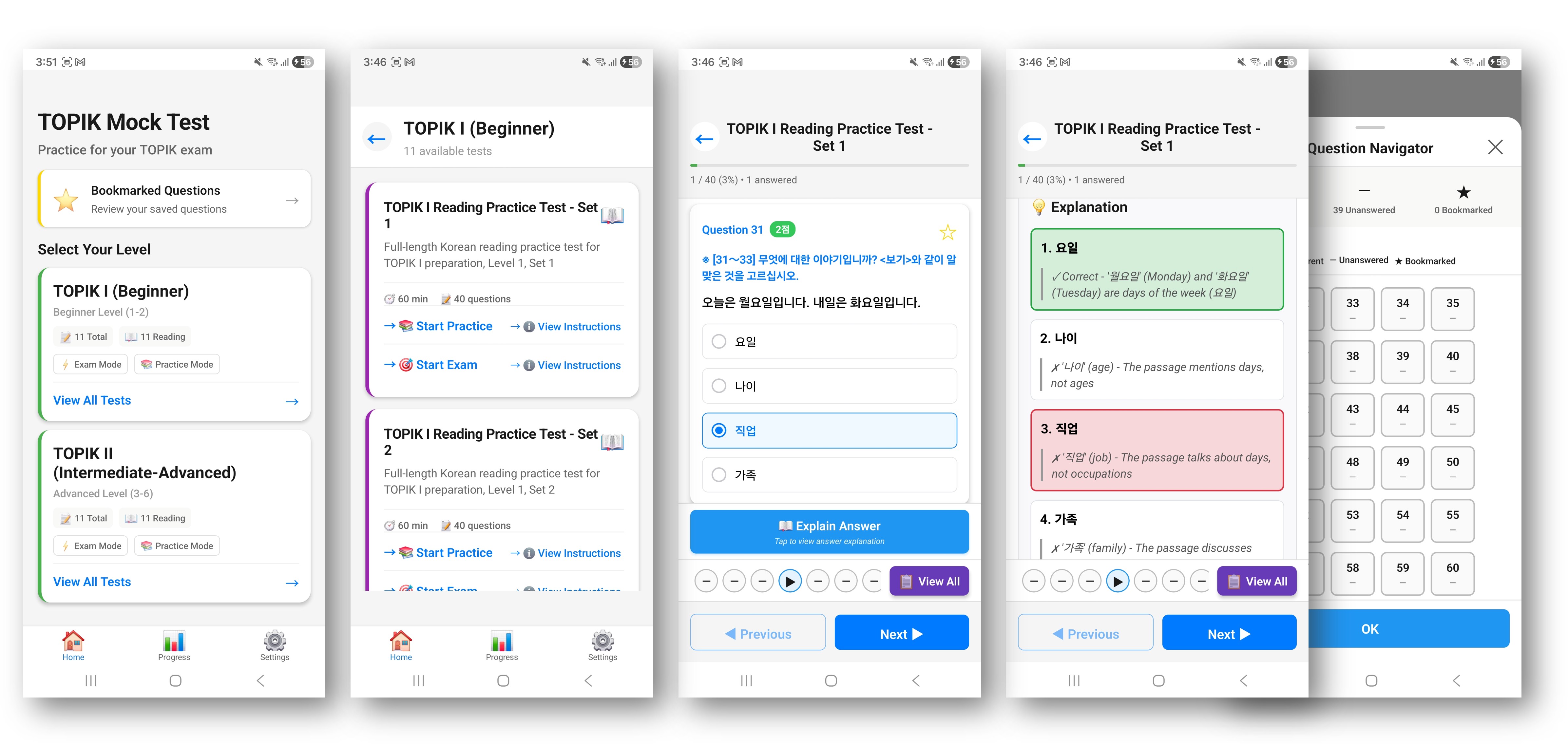
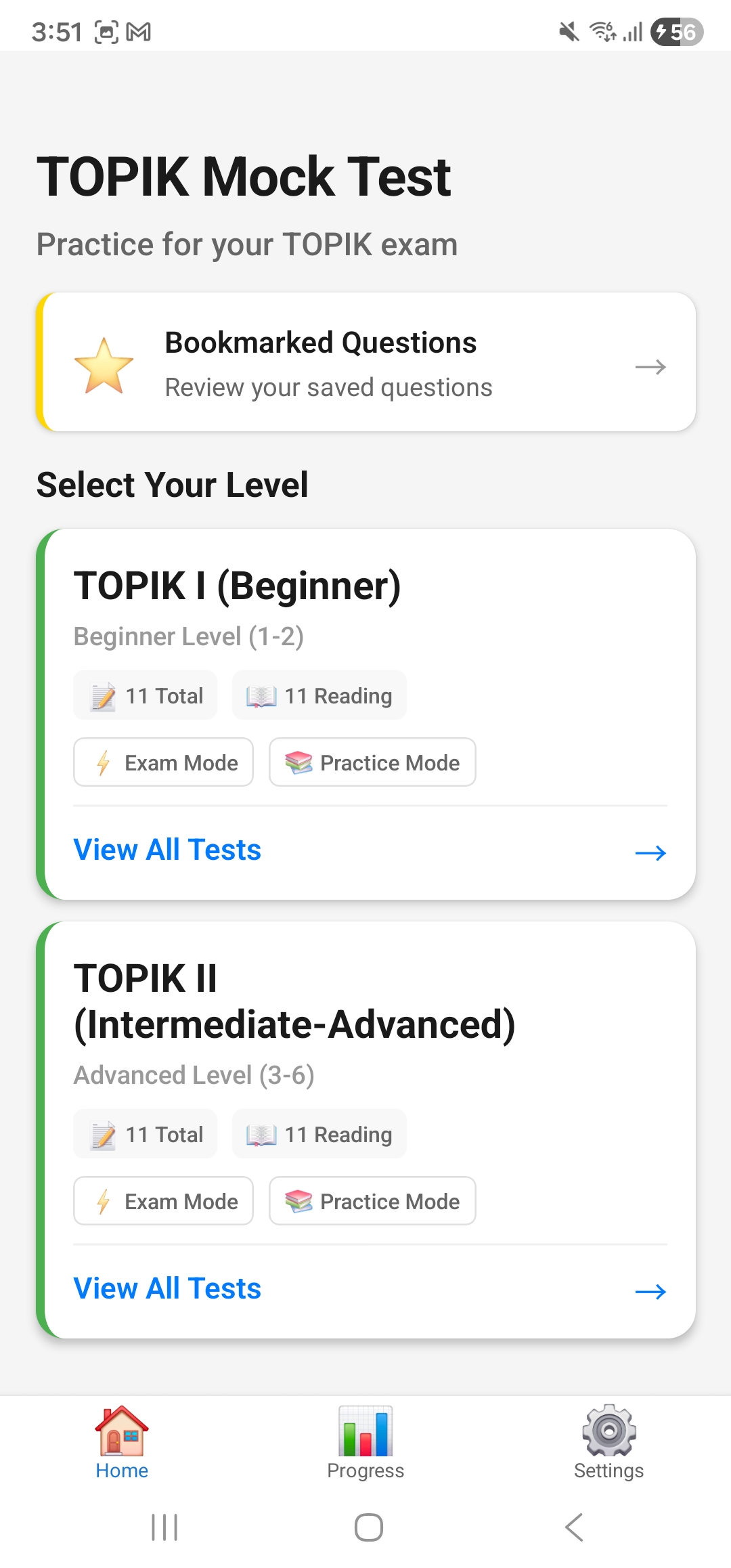
TOPIK Mock Test helps you prepare for the TOPIK Korean proficiency exam with full-length practice tests that mirror the real format. Answer listening and reading questions, get scored instantly, and review what you missed.
It works on your phone, so you can study anywhere — on the bus, on a break, or at your desk. Track your progress over time and walk into exam day with confidence.
What TOPIK Is
TOPIK stands for the Test of Proficiency in Korean. It is the official Korean language exam, run by Korea's National Institute for International Education, and it is the qualification institutions actually ask for.
It comes in two exams:
TOPIK I covers beginner level and awards level 1 or 2. It tests listening and reading.
TOPIK II covers intermediate to advanced and awards levels 3 to 6. It adds a writing section to listening and reading.
Which level you need depends on why you are taking it. Undergraduate admission to a Korean university typically asks for level 3 or 4, graduate programmes often want 4 or higher, and many employers and visa routes set their own thresholds. It is worth checking the exact requirement before choosing a target, because studying for level 4 when you need level 3 is a lot of extra work — and the reverse is worse.
Why Practice Tests Beat Reading Notes
Studying by re-reading notes feels productive and is one of the least effective ways to prepare for an exam.
Testing yourself works better than reviewing. Trying to retrieve an answer strengthens the memory far more than seeing the answer again. This is one of the most consistently reproduced findings in learning research, and it is why a practice test is worth more than the same time spent reading.
Wrong answers teach the most. A question you got wrong has identified a gap you did not know you had. Reading a chapter you already understand identifies nothing. This is why the review step matters more than the score.
The format itself is a skill. TOPIK has its own rhythm — how the listening audio is paced, how long you get, how the questions are phrased. Sitting a full-length test teaches you that rhythm, so on exam day the format is familiar and your attention goes on the Korean rather than on working out what is being asked.
Timing has to be practised. Running out of time is one of the most common ways to underperform on a test you actually knew. The only way to learn the pace is to sit under the clock.
Features
TOPIK I and TOPIK II
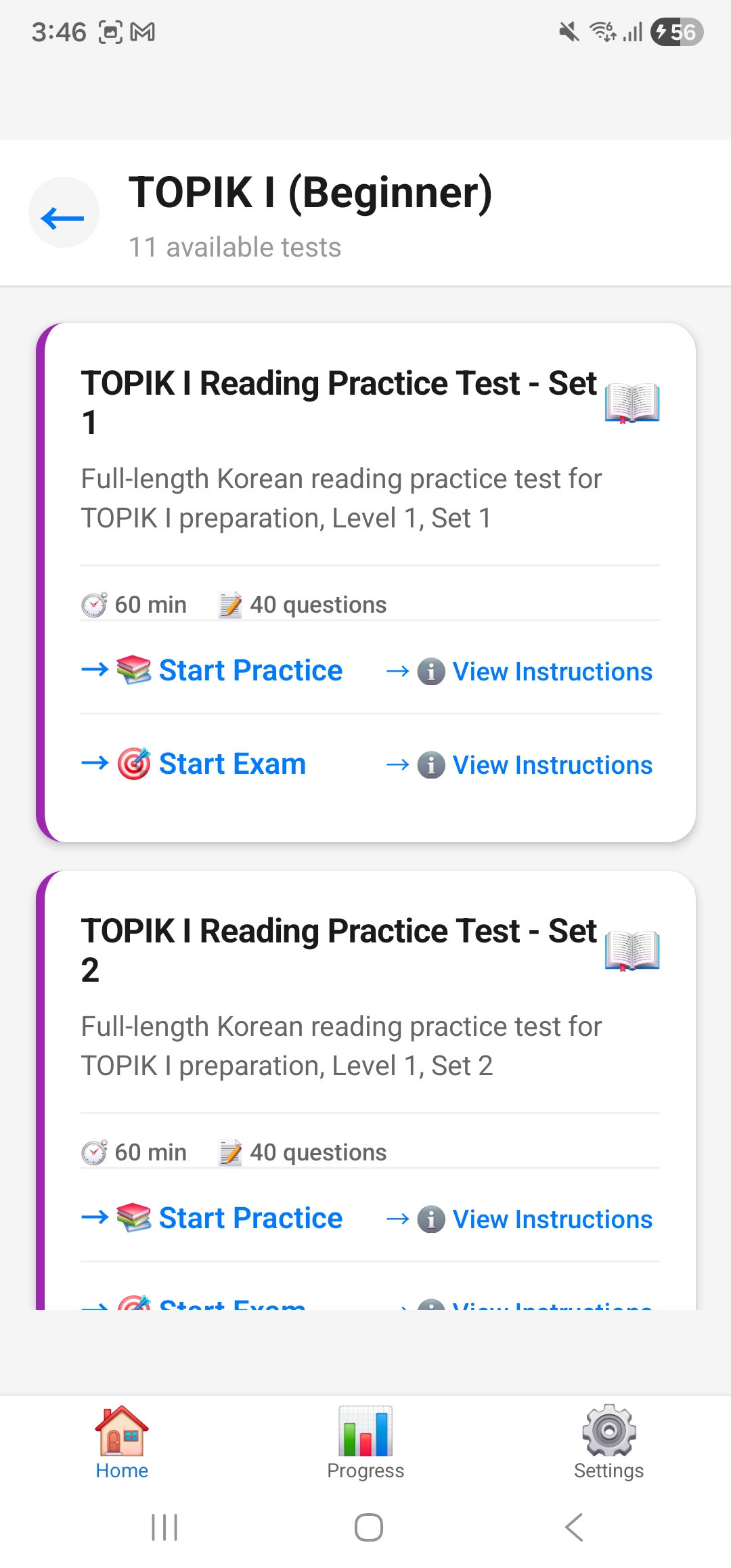
Realistic practice tests that mirror the real exam format.
Know straight away
Get your score the moment you submit, with no waiting.
Understand why
See why an answer was right, so a wrong answer becomes something learned.
Both exam sections
Practise the listening and reading papers as they appear in the real test.
See yourself improve
Track results across attempts and watch the trend over time.
On the bus, on a break
Practise anywhere, with no connection needed.
Perfect For
- Students applying to Korean universities, who usually need level 3 or 4
- Job applicants where a Korean employer or a visa route sets a TOPIK requirement
- Self-studiers with no classroom to sit mock exams in
- Anyone retaking after missing a level, who needs to find the gaps
- Busy learners fitting study into commutes and short breaks
- People who know Korean but freeze in exams, who need format practice more than vocabulary
How to Use Practice Tests Properly
A few habits get much more out of the same tests.
Sit at least one under real conditions. Full length, correct timing, no pausing, no looking anything up. It is uncomfortable, and it is the only way to find out how you actually perform under time pressure.
Spend longer reviewing than testing. A one-hour test deserves more than the two minutes it takes to look at the score. Go through every wrong answer and work out *why* — a misheard word, unknown vocabulary, a misread question, or a guess that happened to be wrong.
Watch the pattern, not the score. One low score means little. Ten attempts showing you consistently lose marks in listening tells you exactly where to put your study time.
Space them out. Sitting five tests in one day teaches far less than one test a week for five weeks. Memory is built by revisiting material after you have partly forgotten it, not by cramming it into one session.
Do not chase a perfect score in practice. The goal is to find weaknesses while they still cost you nothing. A practice test you ace has taught you very little.
Frequently Asked Questions
What is TOPIK?
The Test of Proficiency in Korean, the official Korean language exam run by Korea's National Institute for International Education. TOPIK I covers beginner level and awards levels 1 to 2; TOPIK II covers intermediate to advanced and awards levels 3 to 6. It is the qualification Korean universities and many employers ask for.
Does this app cover TOPIK I and TOPIK II?
Yes. It provides full-length mock tests for both, with listening and reading practice sections that follow the real exam format.
Is the app free?
Yes, it is free to download and use.
Can I study without an internet connection?
Yes. You can practise offline, which makes it practical for commutes, flights and anywhere with poor signal.
How do the explanations help?
Every question comes with an explanation of the answer, so a question you got wrong turns into something you have learned rather than just a lost mark. Reviewing wrong answers carefully is the part of practice testing that produces most of the improvement.
What TOPIK level do I need?
It depends on your goal. Undergraduate admission to a Korean university commonly requires level 3 or 4, graduate programmes often ask for 4 or above, and employers and visa routes set their own requirements. Check the exact threshold for your situation before choosing a target level.
Will practice tests alone get me through the exam?
They are one of the most effective parts of preparation, particularly for learning the exam format and pacing, and for finding gaps you did not know about. They work best alongside vocabulary and grammar study rather than instead of it.
How to use it
- Choose a test — TOPIK I or TOPIK II
- Sit it properly — full length, under time, without looking anything up
- Check your score — instant results as soon as you submit
- Review every mistake — read the explanation and work out why you missed it
- Track the trend — watch your progress across attempts to see where to study next