Screenshots
About this app
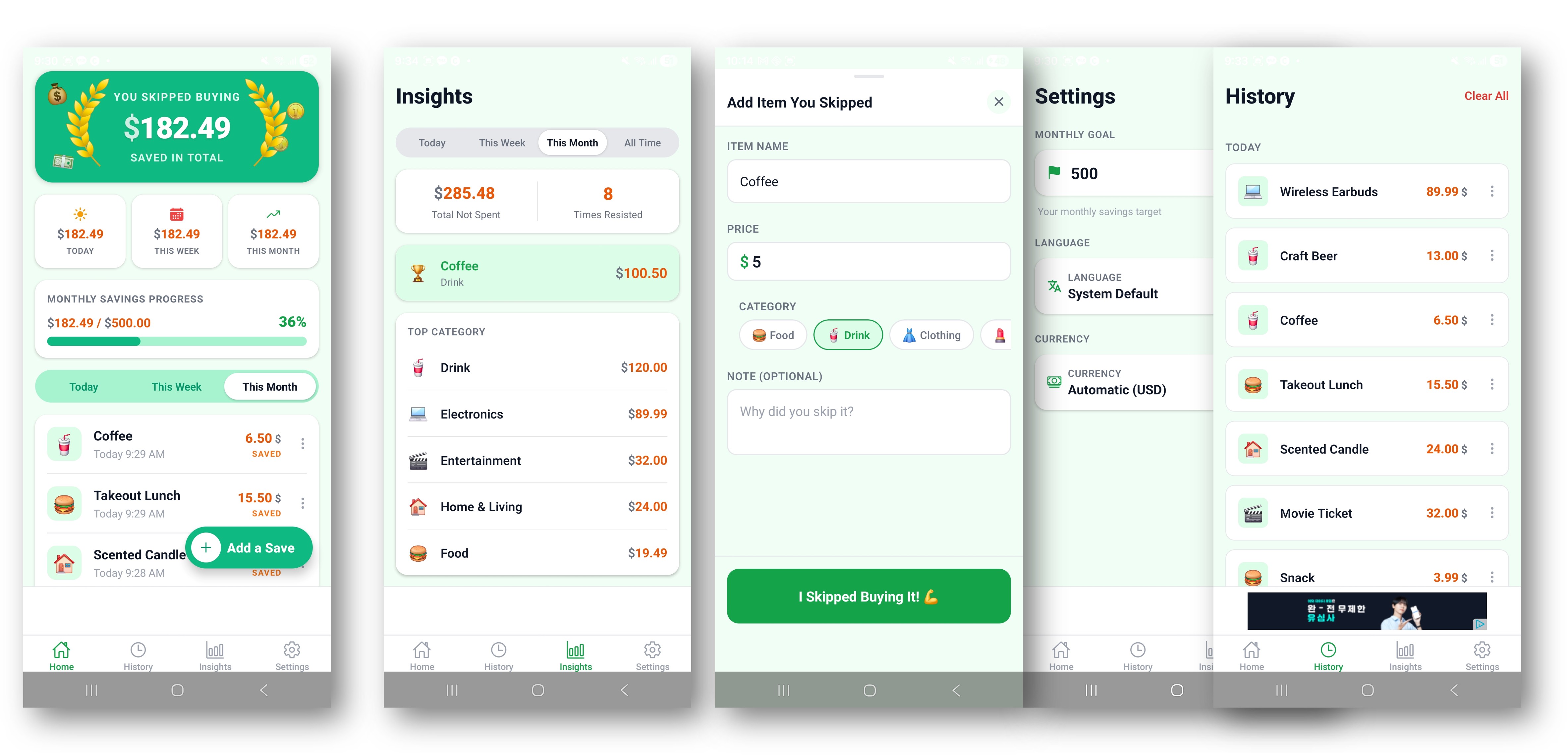
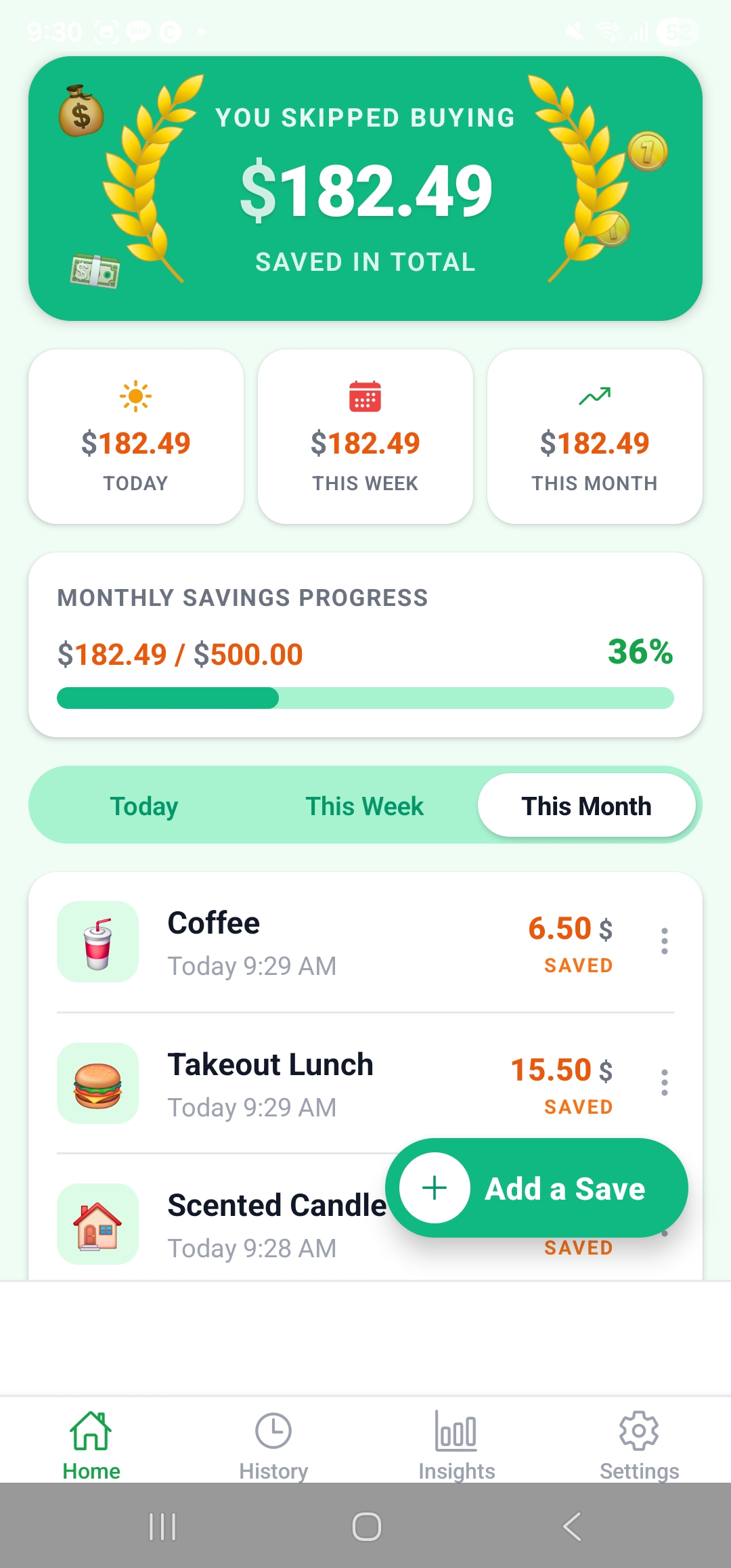
Didn't Buy turns willpower into visible progress. Every time you talk yourself out of an impulse purchase, log it — the app adds up everything you did not buy, so you can see exactly how much you saved this week, this month and this year.
It works offline, needs no account, and keeps your data private on your device. Whether you are paying off debt or building a savings habit, Didn't Buy makes resisting temptation genuinely rewarding.
Why Normal Budgeting Apps Do Not Help Here
Every budgeting app has the same shape. It shows you what you spent. Categories, charts, a monthly total, and the quiet feeling of having done something wrong.
That is useful for planning. It is almost useless in the moment that actually matters — standing in a shop, or hovering over a checkout button at eleven at night, deciding whether to buy something you do not need.
At that moment, a spending tracker offers nothing. It only becomes relevant afterwards, once the money has gone and the entry is a reproach.
Didn't Buy works at the decision, not after it. Resisting becomes an action you take rather than an absence of one. You put the item down, open the app, log the amount — and instead of nothing happening, a number goes up.
Making Saving Visible
Saving money has an awkward psychological problem: nothing happens when you succeed.
Buy something and you get a package, a receipt, a small hit of satisfaction. Resist buying it and you get... nothing. No moment, no reward, nothing to show anyone. Your bank balance is very slightly higher than it would otherwise have been, which is invisible, because you cannot see the version of your balance where you bought the thing.
That asymmetry is why willpower feels so thankless, and it is what this app is designed to fix. Logging an avoided purchase gives the resisting a moment of its own, and the growing total is the evidence that would otherwise never exist.
Then the totals do something more useful still. One avoided purchase of 40 feels trivial. Seeing that you have avoided 600 this year does not — it is a holiday, or a debt payment, or several months of something you actually want. Small individual wins are easy to dismiss; the accumulated total is hard to argue with.
Features
Quick enough to actually do
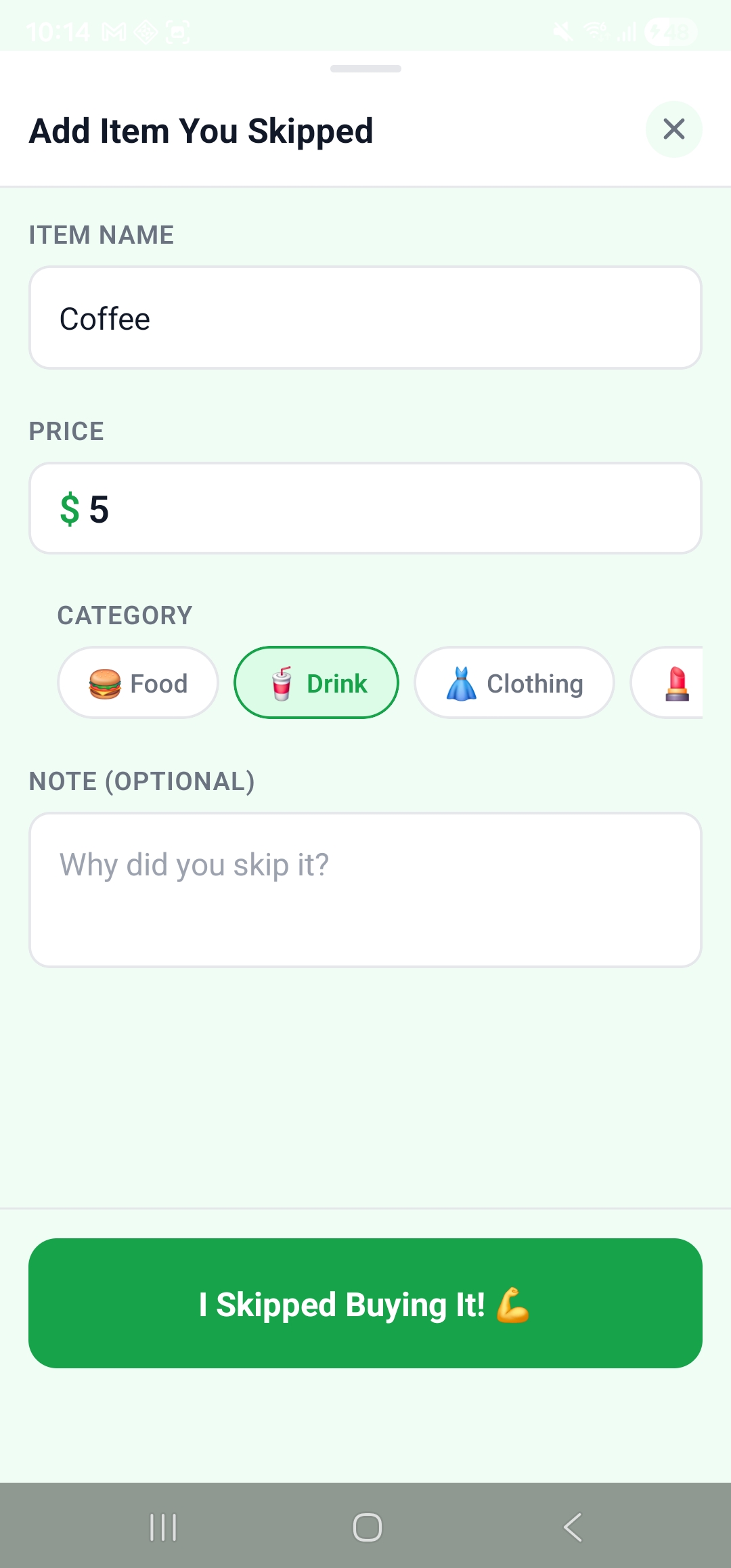
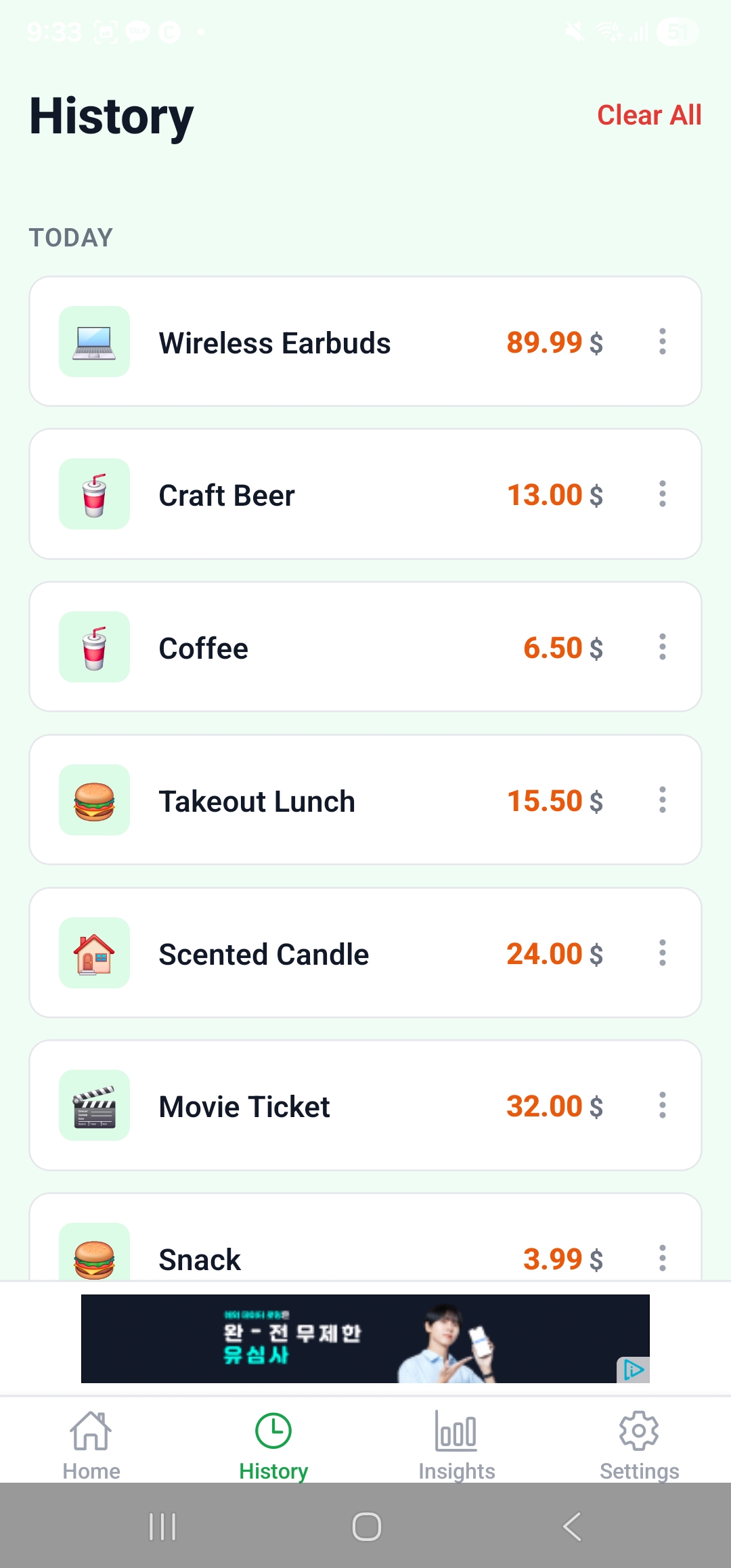
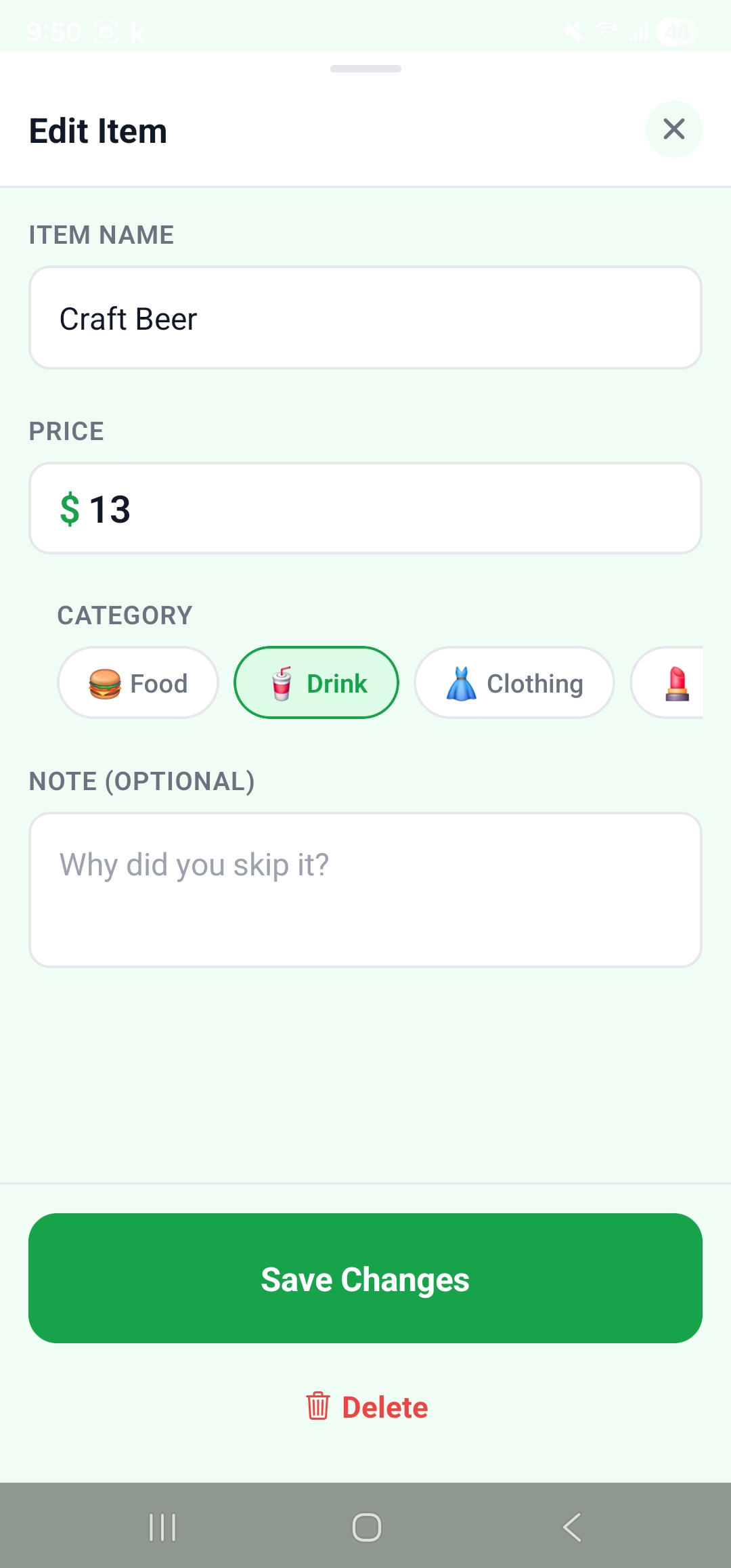
Record what you almost bought with an amount and a short note.
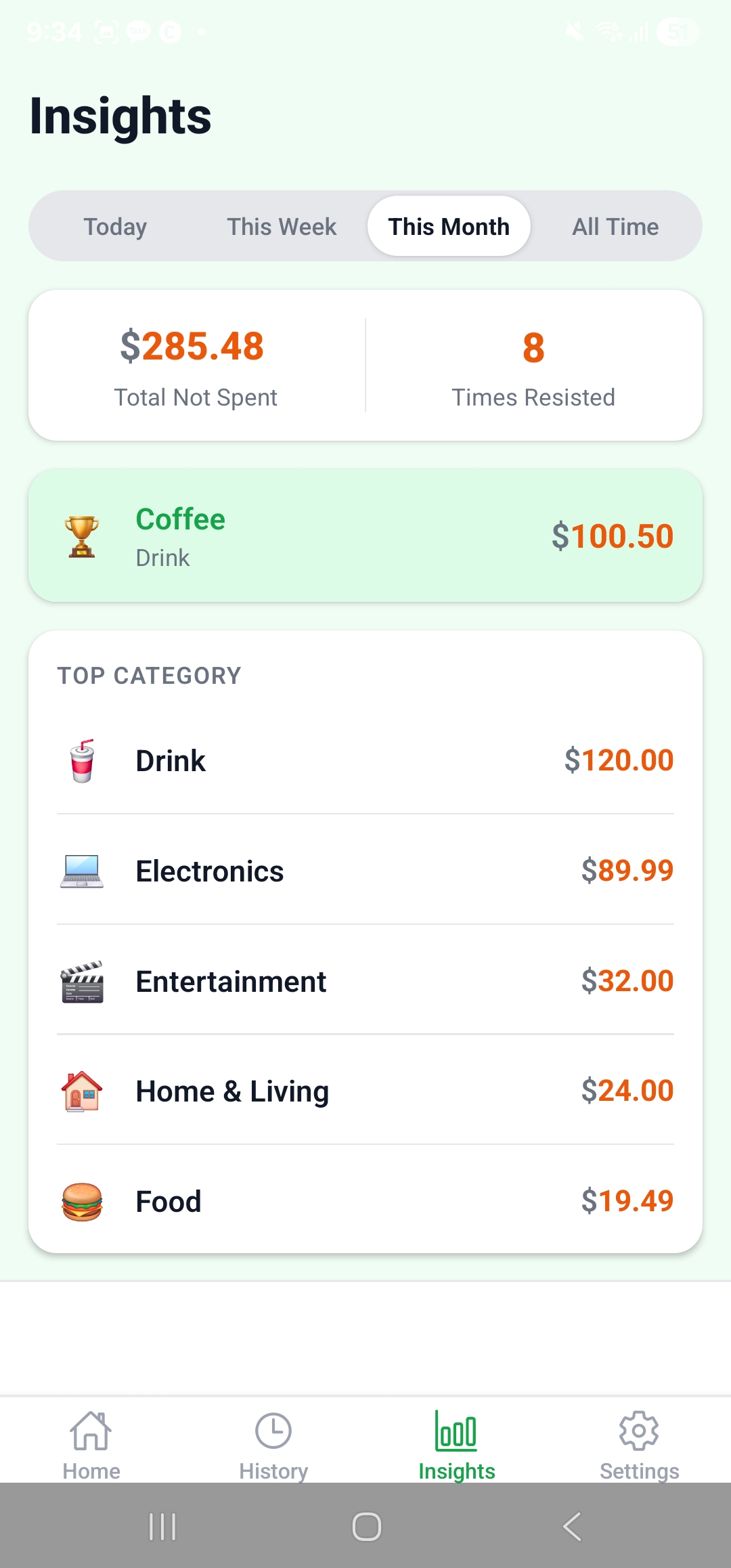
Day, week, month and year
See what you have kept over every timeframe at a glance.
Aim at something real
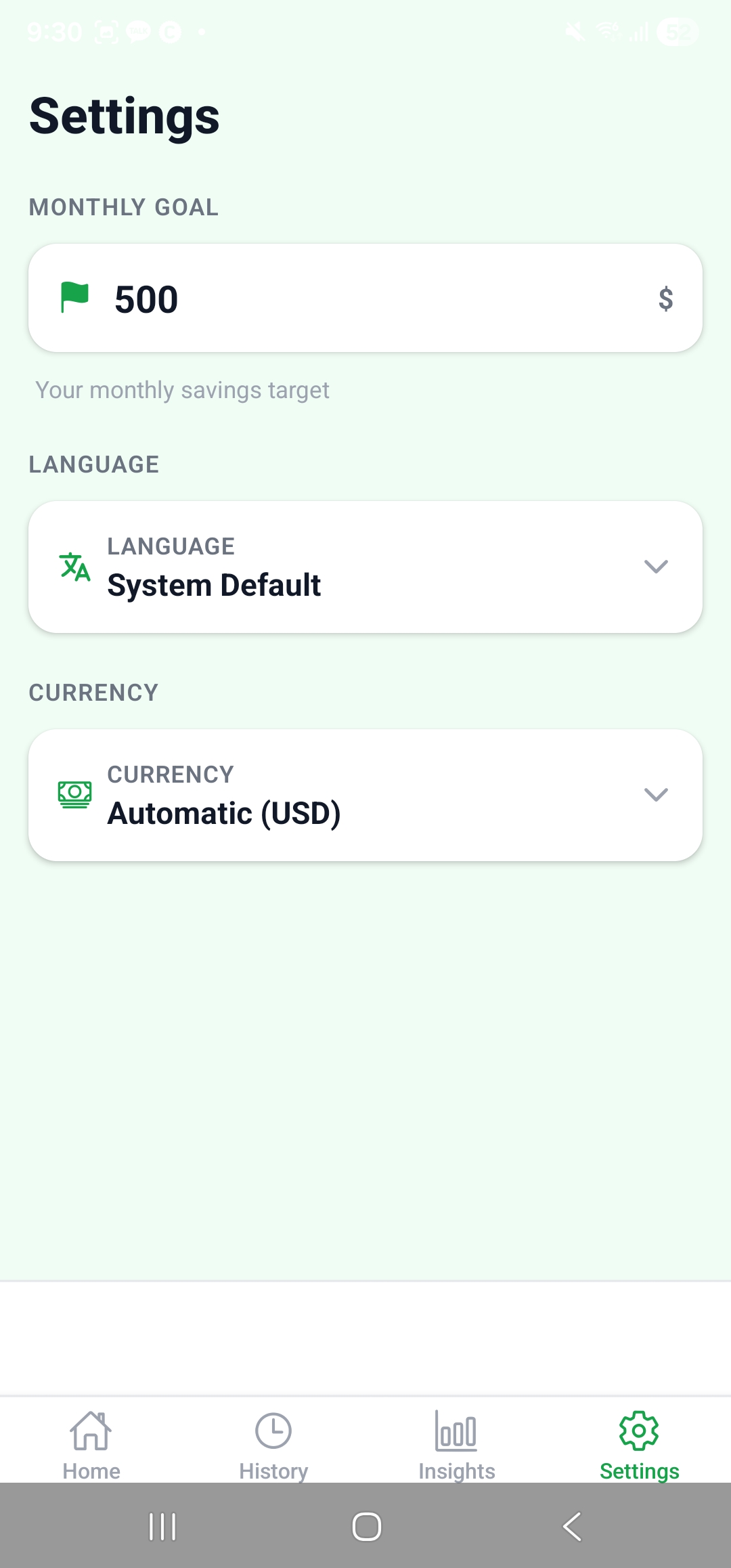
Set a goal and watch clear progress towards it.
Your self-control, visualised
Watch the trend and see the habit building.
No account, no sign-up
Everything works with no connection and no registration.
Stays on your device
Your data is yours. Nothing is uploaded.
Use it in your own language
Available in several languages.
Private by Design
This is financial information, which makes privacy more than a nice extra.
Your entries stay on your device. There is no account to create, no email to hand over, and nothing uploaded to a server — which also means nothing to be leaked in somebody else's breach, and no company building a profile of what you almost bought.
It works fully offline for the same reason. Nothing needs a connection because nothing is being sent anywhere.
Perfect For
- Anyone with an impulse spending habit they are trying to break
- Paying off debt, where every avoided purchase is a real payment
- Saving for something specific — a trip, a deposit, an emergency fund
- Late-night online shopping, the most expensive habit most people have
- People who find budgeting apps discouraging, because those only show failure
- Anyone who wants proof that small refusals add up to something
A Realistic Word About How to Use It
Two habits make the difference between this working and becoming another abandoned app.
Log honestly, including the things you did buy. An app that only records victories becomes a story you tell yourself. The point is a true picture, not a flattering one.
Log only real temptations. Recording a 500 television you were never going to buy inflates the total and makes it meaningless. The number is motivating precisely because it is true — every entry should be something you genuinely almost bought.
And a fair caveat: money you did not spend is not money you saved unless it stays unspent. The total is a record of decisions, not a bank balance. If you want it to be real, move the amount into savings when you log it — then the number in the app and the number in your account agree.
Frequently Asked Questions
What does Didn't Buy actually do?
It records the purchases you decided against. Each time you resist buying something, you log the amount and a short note, and the app totals it up by day, week, month and year — so the money you kept becomes something you can see rather than something invisible.
How is this different from a budgeting app?
Budgeting apps show what you spent, after you have spent it. This one works at the moment of the decision, and it records the choice you made rather than the money that left. It is designed to make resisting feel like an action with a result, instead of an absence of one.
Do I need an account?
No. There is no sign-up, no email and no login. You open the app and start using it.
Does it work offline?
Yes, fully. Nothing needs a connection because nothing is uploaded — all your entries are stored on your own device.
Is my financial data private?
Yes. Your entries stay on your phone and are not sent to a server. There is no account, so there is no profile of your spending anywhere, and nothing that could be exposed in someone else's data breach.
Is the app free?
Yes, it is free to download and use.
What languages is it available in?
Several — the app is published in multiple languages so you can use it in your own.
Does logging a purchase actually save me money?
The logging records a decision; whether it becomes savings depends on what you do with the money. Many people find that moving the amount into a savings account each time they log it makes the total real rather than theoretical. The app's job is to make the decision visible and to show that small refusals accumulate into a meaningful figure.
How to use it
- Resist the purchase — put it down, or close the tab
- Log it — enter the amount and a short note about what it was
- Watch the totals grow across the day, week, month and year
- Set a goal so the total is heading somewhere you actually want to go
- Check the charts now and then to see the habit forming